BUILT BY BAR OWNERS,
FOR BAR OWNERS
The Problem We Lived Every Night
Kred started at The Wrong Number, a bar in North Carolina—not in a tech lab. The owner, a 20-year hospitality technology veteran, and his security team were fed up with the ID scanning solutions on the market. Expensive devices that required monthly subscriptions. Systems that crashed when the WiFi went down. Software that felt like it was designed by people who'd never worked a door.
Every Friday and Saturday night, they dealt with the same problems: squinting at IDs with flashlights, doing mental math to calculate ages, flipping through binders to check if someone was banned, and hoping they didn't accidentally let in someone with a fake ID who'd cause problems—or worse, get the bar fined.
The existing solutions were either too expensive, too complicated, or too unreliable. Most required cloud subscriptions that added up to hundreds of dollars a year per device. And when the internet went down? The whole system became useless.
Expensive Subscriptions
Competitors charge $50-100/month per device on top of hardware costs
WiFi Dependency
Most scanners become paperweights when internet drops
Designed by Tech, Not Nightlife
Clunky interfaces that slow down the line
So We Built Our Own
We decided to build what we actually needed. A scanner that works offline, because WiFi in a crowded bar is never reliable. Software designed for the chaos of a busy door, not a quiet warehouse. And no monthly fees eating into already-thin margins.
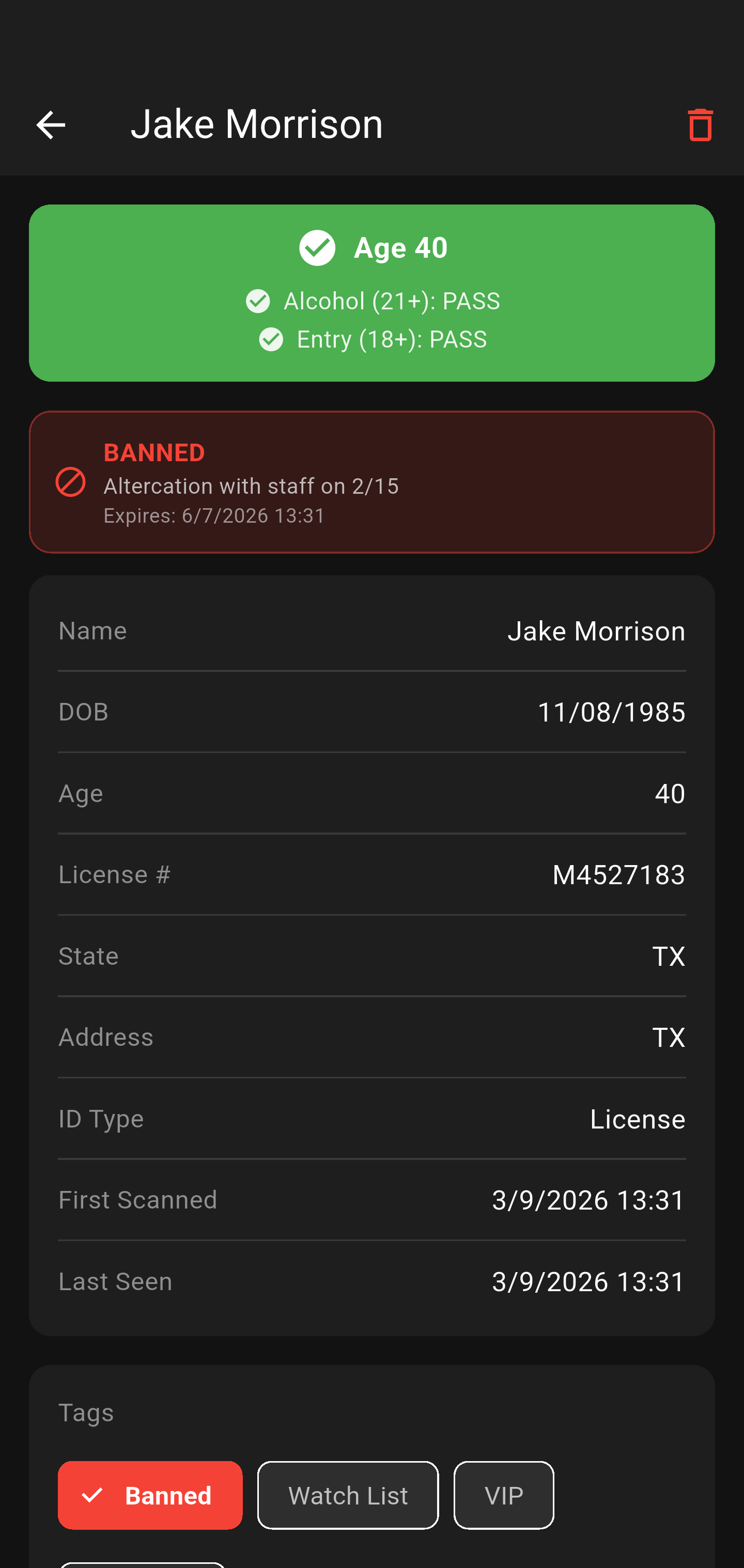
The security team at The Wrong Number helped design every feature. The one-tap ban presets? That came from a bouncer who was tired of typing out reasons at 1 AM. The pass-back detection? From dealing with kids sharing IDs to get their underage friends in. The VIP recognition? Because regulars deserve to feel special.
We tested it ourselves for months before offering it to anyone else. Every bug we found, we fixed. Every feature request from the staff, we considered. The result is a tool built by people who actually use it, every single night.
ALWAYS IMPROVING
We're not a faceless tech company. We still run The Wrong Number every night, which means we're constantly testing and improving Kred based on our own real-world experience. When we encounter a friction point at 1 AM on a busy Saturday, it goes on the fix list.
We also listen closely to feedback from every venue using Kred. Your suggestions shape the product. Many of our best features came directly from customers who said "wouldn't it be great if..."
Regular Updates
Free software updates based on real venue feedback
We Listen
Feature requests from users become real features
Battle Tested
Every feature tested at our own bar first
OUR VALUES
Own Your Hardware
Buy a Kred device and own it forever. No monthly fees required to use core features. Prefer to start smaller? Try our app with a flexible subscription.
Offline First
Your scanner works whether the WiFi does or not. Period.
Built by Users
Every feature comes from real people working real doors.
Privacy Matters
Your patron data stays on your device, encrypted and secure.
A Bar Started It. Twenty Years
of Experience Shaped It.
Our Users Drive It Forward.
The idea for Kred was born at the door of a North Carolina bar, but its founder brought two decades of technology experience across multiple industries to the table — industries where verifying someone's identity wasn't just about checking age, but about protecting businesses from fraud, liability, and compliance failures.
What started as a better way to check IDs at the door became something bigger: a verification platform built for any business that needs to trust the ID in front of them. From dispensaries navigating strict state regulations to dealerships guarding against identity fraud, the same core problem kept showing up — and Kred was already solving it.
But the DNA of Kred is still the door. The bar staff who helped build Kred aren't a footnote — they're the reason it works in the real world, not just on paper. And they're not the only ones shaping it. Every feature request, frustration, and "what if you could..." from our customers goes into what we build next. We don't build in a vacuum and hand you a product to take or leave — we build with the people who use Kred every night, and the product gets better because of it.
We Value Your Privacy
We use cookies to enhance your browsing experience and analyze site traffic. By clicking "Accept All", you consent to our use of cookies. Read our Privacy Policy for more information.